Society and identity
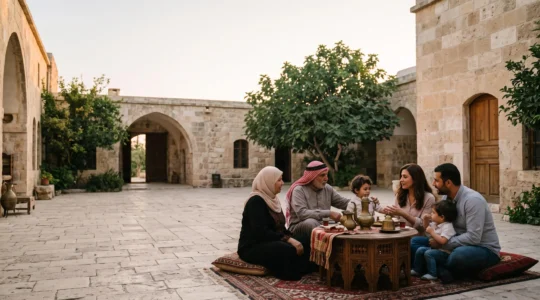
The Adaptive Cornerstone: Why The Arab Extended Family Persists in a Modern World
The resilience of the Arab extended family is not a passive continuation of tradition, but an active and adaptive socio-economic system that provides superior structural support compared to Western individualistic models. Financial resilience is achieved through modernized, trust-based mechanisms that…
Read more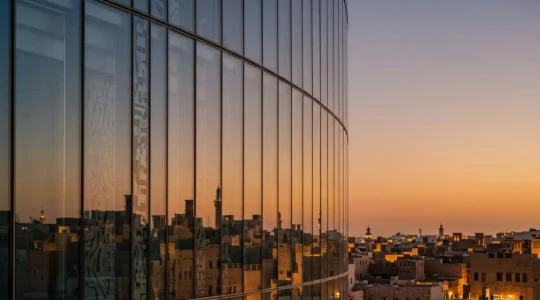
Glass, Steel, and Memory: How Gulf Skyscrapers Embody the Tension Between Heritage and Modernity
The glass skyscraper in the Arab Gulf is not a passive symbol of change but an active urban artifact that fundamentally reconfigures the region’s relationship with its own heritage, often reducing deep cultural forms to surface-level aesthetics. Architectural modernity in…
Read more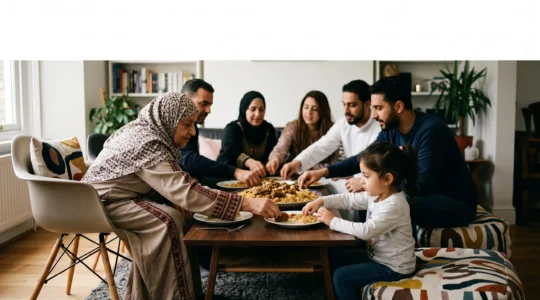
How Do Communal Meals Reinforce Social Hierarchy And Cross-Generational Bonding?
Contrary to the popular view of Arab dining as simply an expression of hospitality, it functions as a highly structured social theatre for cultural transmission. The shared platter is not just for sharing; it is a tool that forces psychological…
Read more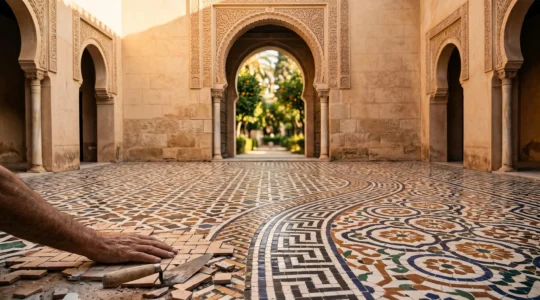
The Integration Engine: How Arab Civilization Forged a Cohesive Identity from 20 Cultures
The multicultural success of Arab civilization was not an accident of tolerance, but the result of an ‘integration engine’ that deliberately engineered proximity and intellectual arbitrage to create value. Hierarchical integration, while imperfect, provided a stable framework that incentivized professional…
Read moreRôle symbolique : fortifications et identité urbaine
Imaginez Carcassonne, ses tours imposantes se dressant fièrement. Ces pierres séculaires ne sont pas de simples vestiges, mais des éléments fondateurs de l’identité de la cité, influençant son image. Les fortifications, d’abord défensives, ont acquis une dimension symbolique majeure. Elles…
Read moreTraditions tribales : identité et cohésion à sanaa
Imaginez la place Tahrir à Sanaa, autrefois un lieu vibrant de couleurs et de chants lors des célébrations tribales. Des hommes, arborant fièrement leurs jambiyas traditionnelles, dansaient au rythme des tambours, tandis que les femmes, ornées de bijoux d’argent, partageaient…
Read moreInscriptions patriotiques : la fierté gravée dans la pierre
L’érosion du temps et les intempéries ne parviennent pas à effacer complètement les messages gravés dans la pierre. Ces inscriptions, souvent discrètes, parfois monumentales, sont bien plus que de simples commémorations. Elles constituent des témoignages directs et tangibles de l’évolution…
Read moreRencontres interreligieuses : jérusalem, symbole de dialogue et de paix ?
Dans une ruelle pavée de Jérusalem, ville sainte, un pèlerin juif, aisément reconnaissable à sa kippa, témoigne d’un geste fraternel en aidant un pèlerin musulman, dont la djellaba témoigne de son long voyage, à porter une valise particulièrement lourde. Cette…
Read more