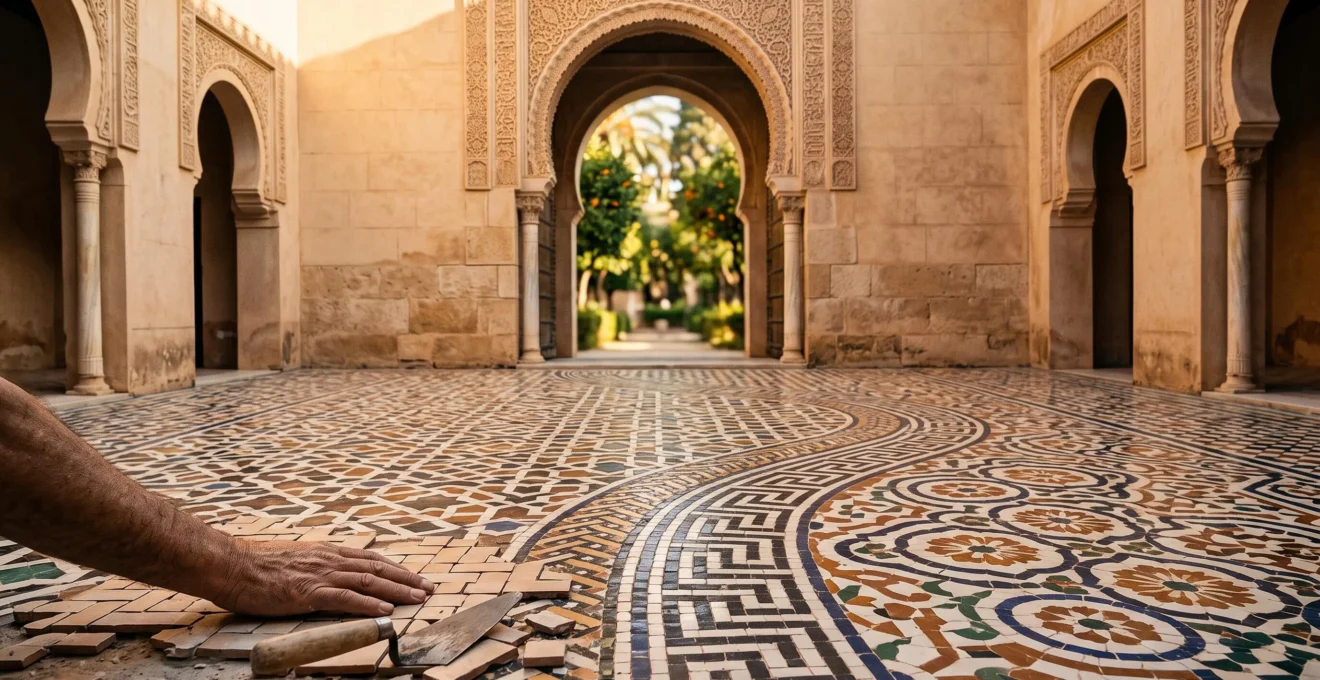
The multicultural success of Arab civilization was not an accident of tolerance, but the result of an ‘integration engine’ that deliberately engineered proximity and intellectual arbitrage to create value.
- Hierarchical integration, while imperfect, provided a stable framework that incentivized professional and economic interdependence over sectarian conflict.
- Centralized, state-sponsored knowledge hubs like Baghdad’s House of Wisdom acted as innovation accelerators by forcing the combination of disparate intellectual traditions.
Recommendation: Analyze these historical models not for their ideology, but for their functional mechanisms to understand the inherent trade-offs of modern diversity policies.
In our modern discourse, integrating diverse populations is often framed as a challenge of tolerance, a question of fostering a “melting pot” where differences dissolve into a homogenous whole. We celebrate diversity, yet struggle with the practical realities of creating a cohesive and productive multicultural society. This conversation often looks to history for models, with the Arab world’s “Golden Age” frequently cited as a pinnacle of cross-cultural harmony. However, this view often simplifies a complex reality, reducing a sophisticated system to a vague notion of peaceful coexistence.
The common understanding credits this success to a passive tolerance or the simple fact that trade routes connected different peoples. While these factors played a role, they are insufficient to explain the explosive intellectual and cultural synthesis that occurred. The translation of Greek, Persian, and Indian texts was not merely an act of preservation; it was the raw material for a new engine of innovation. The real story is far more strategic and, for today’s sociologists and diversity educators, far more instructive.
What if the key to Arab civilization’s success was not passive tolerance, but a form of active, strategic cultural arbitrage? This perspective suggests that rulers and institutions consciously designed systems—from urban planning to legal structures—to attract, combine, and extract value from diverse knowledge traditions. This was not a hands-off approach; it was an engineered system with specific goals, incentives, and, as we will see, inherent vulnerabilities. It was a model built on creating interdependence, where the value of collaboration far outweighed the benefits of sectarian conflict.
This article will deconstruct that engine. We will explore the specific mechanisms that powered this integration, from the economic incentives in Cordoba to the intellectual supply chains of Baghdad. By examining both the triumphs of this model and its catastrophic failures, we can move beyond platitudes and derive concrete lessons about the structural requirements for turning diversity from a social challenge into a civilizational asset.
This in-depth analysis will explore the structural pillars of this integration. The following sections break down the specific strategies, policies, and environmental factors that enabled the synthesis of a new, cohesive identity from a multitude of cultures.
Summary: The Integration Engine: How Arab Civilization Forged a Cohesive Identity from 20 Cultures
- Why Did Multicultural Cities Produce 3x More Patents Than Homogeneous Ones?
- How Did Cordoba Manage Religious Diversity Among 500,000 Residents Without Sectarian Violence?
- Medieval Cordoba vs. Modern London: Which Integrated Diversity More Successfully?
- The Policy Error That Ignited 40 Years of Sectarian Conflict in 1010 CE
- When Did Successful Rulers Unite Citizens: The 4 Moments That Built Shared Identity?
- Why Did Coastal Cities Share More Culture With Foreign Ports Than Inland Neighbors?
- Why Does Multigenerational Living Improve Financial Resilience?
- How Did the Mediterranean Sea Become a Highway for Cultural Exchange Rather Than a Barrier?
Why Did Multicultural Cities Produce 3x More Patents Than Homogeneous Ones?
The immense intellectual output of cities like Baghdad was no accident; it was the direct result of a strategy of engineered proximity. These centers were designed as crucibles for “combinatorial innovation,” a process where new ideas are generated by fusing existing, previously disconnected concepts. Rulers understood that placing scholars, artisans, and merchants from different traditions—Greek, Persian, Indian, and more—in close contact would spark new fields of inquiry. This was a deliberate act of intellectual arbitrage: acquiring undervalued knowledge from one culture and combining it with another to create something new and more valuable.
The ultimate expression of this was Baghdad’s House of Wisdom (Bayt al-Hikmah). It was far more than a library or translation center. It was a complete intellectual ecosystem, including an observatory and residences for scholars. As detailed in a historical analysis of Baghdad’s House of Wisdom as a knowledge hub, the institution’s primary function was to create an environment for the “appropriation and naturalisation of Greek science.” This wasn’t passive reception; it was an active process of adaptation and synthesis.
The city itself became a physical manifestation of this intellectual supply chain. Innovations in papermaking (from China) were combined with new ink formulas and bookbinding techniques (from across the empire), enabling the rapid and affordable dissemination of these newly synthesized ideas. By concentrating diverse human capital and raw materials in one place, these cities created an innovation feedback loop, where each new discovery provided the foundation for the next, dramatically outpacing more homogenous and isolated regions.
How Did Cordoba Manage Religious Diversity Among 500,000 Residents Without Sectarian Violence?
The relative peace in a metropolis like 10th-century Cordoba was not based on modern ideals of egalitarianism but on a pragmatic system of hierarchical integration. This structure, while unequal, created a powerful web of economic and professional interdependence that made large-scale sectarian violence costly for all parties, especially the elites. Non-Muslim communities (Christians and Jews) were granted dhimmi status, which provided protection and religious autonomy in exchange for a specific tax and acceptance of Muslim authority. While this was a subordinate status, it gave minority groups a clearly defined and legally protected role within the state.
This system actively incentivized collaboration. The ruling Caliphate required the skills and networks of its minority populations to govern effectively. The most talented individuals, regardless of their faith, could rise to positions of immense influence, binding their communities’ interests to the stability of the state. This created a powerful bulwark against sectarianism, as minority leaders had a vested interest in upholding the system that guaranteed their status and prosperity.
Hasdai ibn Shaprut: A Jewish Physician-Diplomat in the Caliph’s Court
A prime example of this interdependence is the career of Hasdai ibn Shaprut, a 10th-century Córdoban Jew. He served as the personal physician, diplomat, and trusted advisor to Caliph ʿAbd al-Rahman III. His high-level position demonstrates how essential minority expertise was to the functioning of the state. Furthermore, Hasdai used his influence to become a major patron of Hebrew culture, sponsoring writers who adapted Arabic poetic meters into Hebrew, sparking a golden age of Jewish literature in Spain. This shows a dual benefit: the state gained a skilled administrator, and the Jewish community gained a powerful protector who could foster its unique cultural development within the Caliphate’s framework.
This model of interlocking interests meant that stability was a shared goal. The Caliph needed the administrative and economic contributions of non-Muslims, and non-Muslim elites needed the Caliph’s protection to thrive. This pragmatic arrangement, though falling short of modern equality, was remarkably effective at managing diversity and preventing the kind of widespread sectarian conflict that would later plague the region.
Medieval Cordoba vs. Modern London: Which Integrated Diversity More Successfully?
It is tempting to draw a direct line from the multiculturalism of medieval Cordoba to that of a modern city like London, presenting the former as an early blueprint for the latter. However, as historian Hillel Halkin notes, “Such an analogy is misleading.” The foundational principles of their integration models are fundamentally different, and each comes with a distinct set of strengths and weaknesses. Cordoba was built on a system of hierarchical integration under a single, dominant culture and religion, while London is based on egalitarian pluralism under secular law.
In Cordoba, unity was imposed from the top down. A shared elite culture, sponsored by the ruler, served as the social glue. Non-Muslims had a protected but subordinate legal status (dhimmi). In contrast, modern London’s unity is based on the principle of equal citizenship and individual rights, with no single culture holding legal primacy. Understanding the trade-offs between these two models is essential for any serious discussion of multicultural policy.
The following table, based on an analysis comparing these two societal structures, breaks down the key differences in their approaches to integrating diverse populations.
| Dimension | Medieval Cordoba (Hierarchical Integration) | Modern London (Egalitarian Pluralism) |
|---|---|---|
| Basis of Unity | Ruler-sponsored high culture and legal hierarchy (dhimmi status) | Individual rights and equal citizenship under secular law |
| Chief Strength | Rapid synthesis of a new shared elite culture (philosophy, poetry, science) | Protection of individual freedom and legal equality regardless of origin |
| Chief Vulnerability | Entirely dependent on central authority; brittle once power collapsed | Vulnerable to social fragmentation, polarization, and weak shared identity |
| Role of the ‘Other’ | Clearly defined subordinate legal role (dhimmi) | Often undefined civic role, generating uncertainty and anxiety |
Cordoba’s model was highly effective at generating rapid cultural synthesis and maintaining stability, but it was brittle. Its success was entirely dependent on the strength of the central authority. London’s model provides greater individual freedom and legal equality but can struggle with social fragmentation and the creation of a strong, shared civic identity. Neither system is perfect; they represent a fundamental trade-off between stability through hierarchy and freedom through pluralism.
The Policy Error That Ignited 40 Years of Sectarian Conflict in 1010 CE
The sophisticated system of interdependence that maintained peace in al-Andalus was remarkably effective, but it was also fragile. Its stability rested on a delicate balance: the ruler had to be seen as an arbiter above all factions, ensuring that the benefits of the multicultural system were distributed widely enough to maintain loyalty. The collapse of the Caliphate of Cordoba, known as the Fitna of al-Andalus, illustrates a critical vulnerability: the Praetorian Guard Flaw. This occurs when a leader, fearing for their own power, breaks the implicit pact of neutrality and shows favoritism to one ethnic or military group over others, shattering the unity of the state.
This is precisely what happened in the early 11th century. The ruler Almanzor, in a bid to consolidate his power, began to heavily favor Berber mercenaries over the other Arab and local groups that formed the backbone of the Caliphate’s society and military. This policy of ethnic favoritism destroyed the carefully constructed balance. It signaled to other groups that merit and loyalty to the state no longer mattered as much as ethnic origin. This, combined with immense tax burdens to finance constant warfare, created a powder keg of resentment.
The Fitna of al-Andalus: When Ethnic Favoritism Broke the Caliphate
The Fitna was not a simple invasion or a single rebellion; it was the catastrophic implosion of the multicultural state. Once Almanzor’s policy of ethnic favoritism became entrenched, the various groups within al-Andalus—Arabs, Berbers, and local Hispano-Romans (Muladi)—no longer saw their interests as aligned with the central state. The Caliphate fractured into dozens of smaller, competing statelets (taifas), each based on the ethnic or political faction that seized power. The subsequent civil wars were devastating. In what was once a beacon of cosmopolitan peace, historical records indicate that 10,000-30,000 men were killed in just one battle of the conflict in 1009. This single policy error unwound a century of successful integration, demonstrating that such systems are only as strong as the ruler’s commitment to impartiality.
The lesson is stark: in a complex, multicultural state held together by pragmatic interdependence, the leader’s role as a neutral and fair arbiter is paramount. Once that trust is broken through overt favoritism, the system’s greatest strength—its diversity—becomes its greatest weakness, providing the fault lines along which the state will shatter.
When Did Successful Rulers Unite Citizens: The 4 Moments That Built Shared Identity?
A cohesive multicultural identity does not emerge organically; it is actively constructed through deliberate, symbolic, and structural actions by a central authority. Successful rulers in the Arab world understood that to unite disparate groups, they needed to create new focal points of loyalty that transcended pre-existing tribal, ethnic, or religious affiliations. This process generally involved four key strategic moments or initiatives: symbolic unification, intellectual unification, economic integration, and legal framework establishment.
First, symbolic unification often involved creating a new capital city. Building a capital like Baghdad’s “Round City” (Madinat as-Salam, the ‘City of Peace’) on new ground sent a powerful message: this new state owed no allegiance to any single pre-existing faction. It was a neutral space where a new, shared identity could be forged. Second, intellectual unification was achieved through state-sponsored projects like the House of Wisdom. By bringing scholars from all over the world to work on a common project, rulers like Caliph al-Ma’mun created a new merit-based intellectual elite, whose loyalty was to the Caliph and the pursuit of knowledge, not to their tribe or sect.
Third, economic integration was fostered by standardizing currency, securing trade routes, and creating legal structures that facilitated commerce between different groups. When a merchant in Cordoba could reliably do business with one in Damascus, their shared economic identity began to outweigh their local differences. Fourth, the establishment of a unified legal framework, like the dhimmi system, provided a predictable (if hierarchical) structure for inter-communal relations, reducing conflict by clarifying the rights and responsibilities of each group. These four interventions worked in concert to build a new, overarching identity centered on the state itself.
Action Plan: Auditing a Historical Model of Shared Identity
- Symbolic Centers: Identify purpose-built cities, monuments, or institutions created to establish a new, neutral center of power and identity.
- Intellectual Projects: Inventory state-sponsored initiatives (translation movements, academies, observatories) that brought together diverse minds to create a new intellectual elite.
- Economic Frameworks: Analyze the tools of economic integration, such as standardized currencies, commercial laws, and state-protected trade networks.
- Legal Structures: Examine the legal codes governing inter-group relations. Did they create predictability and define roles, even if hierarchical?
- Vulnerability Points: Pinpoint the system’s dependencies. Was it reliant on a single charismatic leader, a specific economic resource, or a policy of neutrality?
Why Did Coastal Cities Share More Culture With Foreign Ports Than Inland Neighbors?
The identity of a coastal trading city was often shaped more profoundly by its maritime network than by its own geographic hinterland. For cities like Alexandria, Tunis, or the merchant colonies of Genoa and Venice in the Levant, the sea was not a boundary but a superhighway. This intense connectivity created a transnational port culture, a shared set of commercial customs, languages, and legal norms that bound distant port cities together more tightly than they were to their own inland rulers. A merchant in a Genoese colony in Byzantium operated within a commercial world that was immediately recognizable to a colleague in Genoa itself, but alien to a farmer just 50 miles inland.
This phenomenon was driven by practical necessity. Long-distance sea trade required a high degree of trust and predictability. To facilitate this, merchants developed shared systems that transcended local laws and customs. This included sophisticated credit systems that allowed for the transfer of value without the physical shipment of coin, the widespread use of a common trade language or lingua franca, and a shared understanding of maritime law. This created a distinct identity based on one’s profession and participation in this network, rather than one’s place of birth.
This is clearly illustrated by the activities of the Italian maritime republics. As one historical overview notes, Genoa and Venice established footholds in the eastern Mediterranean by providing transport and supplies during the Crusades. In exchange, they received grants for trading colonies in major port cities. These colonies became nodes in a vast network, operating under their own laws and customs. They were extensions of their home city, creating a powerful economic and cultural bond across the sea that often superseded any loyalty to the local ruler of the territory they physically occupied. The result was a world where a port city’s primary cultural and economic allegiance was to its network of sister ports across the water.
Why Does Multigenerational Living Improve Financial Resilience?
On a micro-level, the fundamental unit of social and economic cohesion that underpins larger civilizational integration is the multigenerational household. This structure, common throughout the Arab world and many other traditional societies, acts as a powerful engine of financial resilience. It functions as a private social safety net, pooling resources, sharing risks, and providing a level of stability that is difficult to achieve in more individualistic, nuclear family structures. This is not merely a matter of sentiment; it is a highly practical economic arrangement.
The financial benefits are threefold. First, it involves resource pooling. By sharing a single dwelling, families drastically reduce overhead costs for housing, utilities, and food. This frees up capital that can be saved, invested, or used to support a family member starting a business. Second, it facilitates the sharing of labor. Grandparents often provide childcare, enabling both parents to work, while younger adults can provide physical support for their elders. This creates an efficient internal economy of services. Third, and most crucially, it provides risk diversification. If one member of the household loses their job or faces a medical emergency, the economic shock is absorbed by the entire unit, preventing the catastrophic financial failure that could befall a single-income household.
Beyond the purely financial, this model fosters the transfer of social and intellectual capital. Knowledge, skills, and cultural values are passed down directly from one generation to the next, ensuring continuity. This deep-seated interdependence within the family unit can be seen as a microcosm of the wider societal integration seen in successful multicultural states. Both rely on a shared understanding that the well-being of the individual is inextricably linked to the stability and prosperity of the group.
Key Takeaways
- Successful integration is not passive tolerance but an active, engineered system of incentives, policies, and shared institutions.
- Hierarchical integration, while unequal, created stability by making interdependence more profitable than conflict for community elites.
- Centralized knowledge hubs like the House of Wisdom were deliberate “innovation engines” designed to create new intellectual property through cultural arbitrage.
- The entire system’s stability is brittle and highly dependent on the central authority acting as a neutral arbiter, avoiding ethnic or sectarian favoritism.
How Did the Mediterranean Sea Become a Highway for Cultural Exchange Rather Than a Barrier?
The transformation of the Mediterranean from a formidable barrier into the central highway of the Western world was driven by a complex interplay of shared opportunity and shared threat. It was not merely a passive body of water but an active zone of interaction, where the potential for immense profit from trade was balanced against the constant danger of piracy and conflict. This dynamic forced the diverse peoples living on its shores to develop common tools and systems to manage both aspects.
On the side of opportunity, the sheer efficiency of sea travel for moving bulk goods made maritime trade irresistible. To reduce the friction of this trade, a common commercial language, the Mediterranean Lingua Franca, emerged. As a simplified pidgin language, it was nobody’s native tongue but was understood by merchants, sailors, and officials from Barcelona to Beirut. Its initial adoption by Genoese and Venetian trading colonies highlights its origin as a tool of commerce. This shared language, along with common credit systems and commercial practices, created a unified economic space across the sea.
Conversely, shared threats also fostered interaction. The danger of piracy, particularly from the Barbary corsairs, was a universal concern. Historical records suggest that between the sixteenth and nineteenth centuries, Barbary corsairs held over 1 million European slaves. This constant threat forced states to cooperate in unexpected ways. It necessitated complex diplomatic negotiations, ransom payments, and even military alliances between Christian and Muslim powers. This hostile interdependence meant that even adversaries had to maintain channels of communication and develop shared protocols for dealing with captured citizens and ships. The sea, therefore, acted as a crucible, forcing interaction through both the pull of profit and the push of mutual danger.
By deconstructing these historical models, we move beyond simplistic narratives of “tolerance” and begin to see integration as a system of engineered incentives and structures. For educators, sociologists, and policymakers, the lesson is clear: a successful multicultural society requires more than good intentions; it requires a deep understanding of the mechanisms that create interdependence and forge a shared sense of purpose.