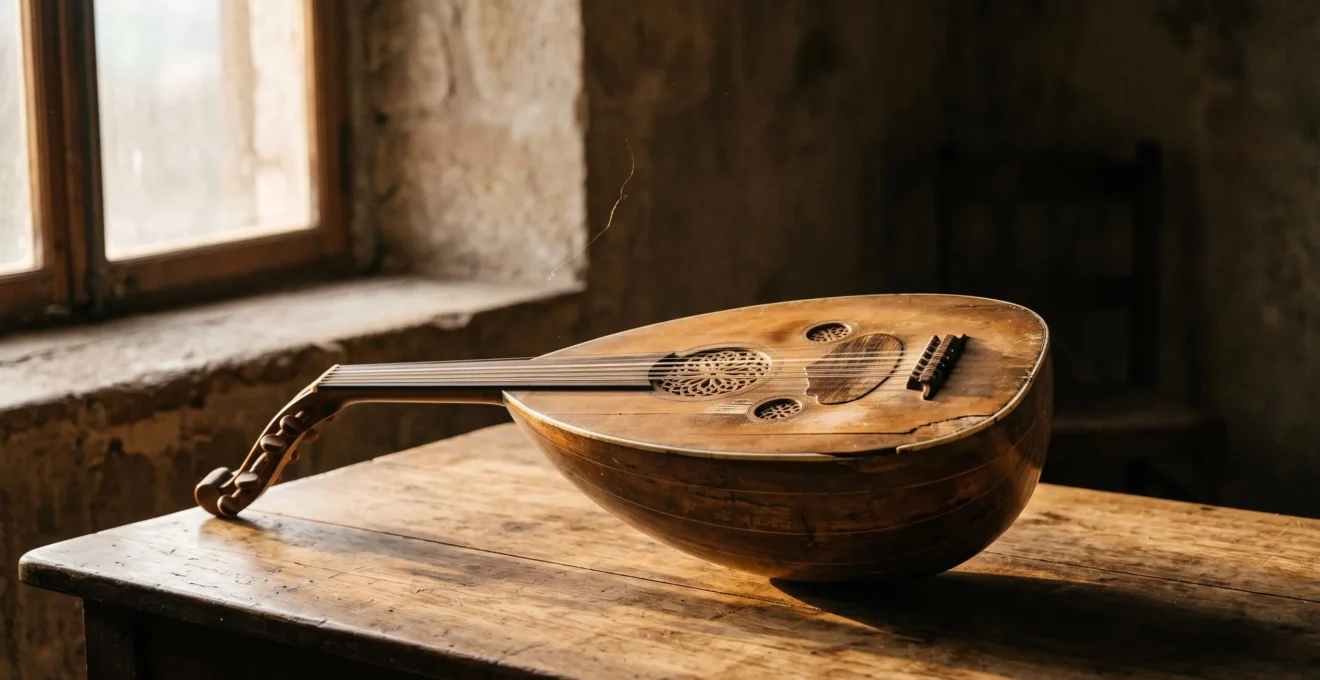
The oud’s enduring dominance in Arab music is not simply a matter of tradition. It stems from a unique convergence of factors: the fretless neck’s capacity to produce neurologically resonant quarter-tone overtones, a vibro-acoustic design optimized for projecting these nuances, and its symbiotic relationship with the Maqam system, a structured grammar of musical emotion. These elements combine to create an expressive depth that Western equal temperament instruments cannot replicate, cementing the oud’s role as the quintessential vehicle for the Arab world’s melodic soul.
For any musician or student of ethnomusicology, the sound of the oud is instantly recognizable. It is more than an instrument; it is the acoustic signature of an entire cultural sphere, a voice that has narrated stories of joy, sorrow, and contemplation for over a millennium. When asked why it holds this revered status, many point to its ancient lineage or its fretless neck. These answers, while true, are incomplete. They describe features but fail to explain the fundamental source of the instrument’s profound emotional power and its unshakeable position at the heart of Arab musical identity.
The common understanding stops at the surface, acknowledging the oud’s ability to play ‘in-between’ notes. But this barely scratches the surface of a far more complex and fascinating reality. The true explanation lies at the intersection of acoustic physics, human neuro-perception, and a highly sophisticated musical theory. The oud is not merely an old instrument that has survived; it is a piece of acoustic technology perfectly engineered to articulate a specific emotional and melodic language. Its design is not a historical accident but a prerequisite for the emotional depth required by the Maqam system.
This analysis moves beyond the platitudes to investigate the technical and musicological foundations of the oud’s power. We will deconstruct the instrument not just as a cultural symbol, but as a system. We will explore how its physical construction generates its unique sound, why those sounds trigger such specific emotional responses in the brain, and how it functions as the ideal instrument for navigating the intricate emotional landscapes of the Maqam. By understanding this trinity of factors—physical form, neurological impact, and theoretical function—we can truly appreciate why, even in a globalized world, the oud remains the undisputed soul of Arab music.
This article provides a detailed musicological breakdown, exploring the core elements that define the oud’s unique sonic and emotional character. The following sections will guide you through its acoustic properties, its role within the Maqam system, and the technical nuances that separate it from all other instruments.
Summary: Why the Oud Remains the Acoustic Soul of Arab Music
- Why Does the Oud Produce Quarter-Tone Overtones Western Guitars Cannot Capture?
- How Do London Luthiers Craft Oud Soundboards That Project Across Concert Halls?
- Oud or Western Guitar: Which Captures Arab Emotional Nuance Better?
- The Tension Mistake That Destroys an Oud’s Signature Resonance
- When Should a Maqam Performance Switch From Oud to Percussion?
- Why Does Each Maqam Evoke a Precise Emotional State Instead of Generic Mood?
- Why Do Quarter Tones Evoke Emotions That Western Equal Temperament Cannot Reach?
- How Does the Maqam System Organise Musical Emotion Into Structured Scale Families?
Why Does the Oud Produce Quarter-Tone Overtones Western Guitars Cannot Capture?
The fundamental difference between an oud and a Western fretted instrument like the guitar lies in the physical mechanism of pitch production. A guitar’s frets enforce the discrete, twelve-tone equal temperament (12-TET) system, a mathematical compromise that allows for harmonic consistency across different keys. The oud, by contrast, possesses a fretless neck. This is not a primitive feature but a sophisticated design choice that grants the player continuous pitch control. The musician’s fingertip acts as a mobile fret, allowing for the precise intonation of intervals smaller than a semitone, most notably the quarter-tone, which is the sonic hallmark of many Arab musical modes (maqamat).
This capability is not a recent development. The 10th-century philosopher and music theorist Al-Farabi, in his seminal work *Kitab al-Musiqa al-Kabir*, documented the oud’s expressive range. As one academic analysis notes, on the oud, “Al-Farabi extracted the intervals 8ve, 4th, 5th, 7th, whole tone, and quarter-tone.” This historical precedent underscores that the instrument was understood as a tool for microtonal exploration from its earliest codification. The ability to produce these notes is not an embellishment; it is intrinsic to the instrument’s purpose.
Modern neuroscience is beginning to explain why these sounds are so potent. The Western ear, conditioned by 12-TET, may perceive quarter-tones as ‘out of tune’, but the brain processes them differently. A pioneering behavioural and EEG study investigated precisely this question, examining how microtonal intervals are perceived compared to equal-tempered ones. The findings suggest that these non-standard intervals trigger unique neural responses, providing a neurophysiological basis for the distinct emotional character they impart. The oud doesn’t just play more notes; it accesses a palette of tones that resonate with the brain on a different level than a fretted guitar can.
How Do London Luthiers Craft Oud Soundboards That Project Across Concert Halls?
The resonant, warm, and yet articulate voice of the oud is not born from its strings alone. The soundboard, or ‘face’, of the instrument is the primary amplifier, and its construction is a masterful exercise in vibro-acoustic engineering. Traditionally built from thin, high-quality spruce or cedar, the soundboard’s lightness is key to its sensitivity. However, it must also be strong enough to withstand string tension without warping. This delicate balance is managed by an intricate system of internal bracing, a pattern of wooden struts glued to the underside of the soundboard that shapes its vibration and, consequently, its tone and projection.
The arrangement of these braces is a luthier’s signature and a critical factor in the final sound. A recent study using finite-element modelling to analyze the oud’s acoustics demonstrated the complexity involved, testing 14 distinct bracing configurations to map their effects on modal vibrations and sound radiation. This scientific approach quantifies what master builders have known for centuries: minuscule changes in brace placement or dimension can dramatically alter an oud’s volume, sustain, and tonal color, optimizing it for the intimacy of a small room or the demands of a large concert hall like those found in London.
This deep craft is thriving in diaspora communities, where luthiers blend traditional knowledge with modern techniques. A prime example is a London-based luthier who embodies this “diaspora innovation.” After receiving a fellowship, he travelled to Turkey to study traditional oud construction with masters in Istanbul. Now, back in his London workshop, he combines these age-old techniques with his own structural and decorative innovations learned from Western lutherie. He not only builds new instruments but also repairs and teaches, ensuring the craft’s transmission to a new generation within a contemporary, cross-cultural context. This fusion of tradition and scientific precision is how the ancient voice of the oud is being fine-tuned for the modern stage.
Oud or Western Guitar: Which Captures Arab Emotional Nuance Better?
The question of which instrument better captures Arab emotional nuance—the oud or a Western guitar—is fundamentally a question of language. The emotional content of Arab music is encoded in the Maqam system, a framework that relies heavily on microtonal intervals to define its character. A Western guitar, with its frets locked into the 12-tone equal temperament system, is simply not equipped to speak this language fluently. It can approximate the melodic contours, but it cannot produce the specific quarter-tones that give a maqam like *Saba* its characteristic melancholic quality or *Rast* its confident energy. It is like trying to recite poetry in a language where certain crucial vowels are missing.
The oud, with its fretless design, is the native speaker of this melodic language. It allows the musician to precisely navigate the tonal space of each maqam, imbuing each note with the correct emotional weight. This is not just a theoretical distinction; it has a measurable perceptual effect. A fascinating cross-cultural listening study explored this very issue, finding that even a Western audience with no prior exposure to Arab music could correctly attribute the intended emotional associations to different maqamat. The study confirmed it is possible for a Western audience to appreciate Arab maqām music and associate specific modes with emotions like energy or grief, just as Arab musicians do. This demonstrates that the emotional code is embedded within the music’s microtonal structure, a structure the oud is uniquely built to articulate.
The scientific community increasingly recognizes the link between these unique tonal systems and emotion, reinforcing the oud’s central role. As a research team from Frontiers in Psychology concluded after a study on Middle Eastern music improvisation:
This result is important because it highlights the importance of considering intervals, tones, and microtones, in studies on processing of music and emotional correlates.
– Frontiers in Psychology research team, EEG Correlates of Middle Eastern Music Improvisations on the Ney Instrument
Ultimately, while a guitar can play a melody from the Arab world, only the oud can truly speak its emotional language. It possesses the necessary phonetic tools—the microtones—to convey the full spectrum of nuance intended by the composer and the Maqam system.
The Tension Mistake That Destroys an Oud’s Signature Resonance
An oud is a paradox of design: it must be strong enough to sing under tension, yet light enough to be maximally resonant. Unlike the robustly constructed modern guitar, which is built to handle the high tension of steel strings, ouds are traditionally built with a much more delicate structure. This lightness is not a flaw; it is the source of the instrument’s incredible sensitivity and rich, complex overtones. However, it also makes the instrument exceptionally vulnerable to one critical mistake: excessive or imbalanced string tension.
As expert luthiers constantly warn, applying strings that are too heavy or tuning the instrument significantly above its intended pitch places immense stress on the thinly carved soundboard and the light internal bracing. The consequences can be catastrophic for the instrument’s health and tone. Over time, this excessive tension can cause the soundboard to warp or “belly,” pulling upward and raising the distance between the strings and the fingerboard (the “action”). This not only makes the oud physically difficult to play but also chokes its resonance, deadening its voice and permanently degrading its signature tone.
There is, however, a nuanced relationship with tension. As the Federation of Euro-Arab Musical Amateurs (FEEFAA) notes, certain modern ouds, particularly those from the Iraqi school pioneered by Muhammad Fadil, are built more robustly. This construction “allows the strings to be under higher tension, resulting in higher sound projection.” This creates a crucial choice for the musician: chase volume and projection with a heavier build and higher tension, or prioritize the subtle resonance and dynamic sensitivity of a lighter, more traditional instrument. For the latter, meticulous tension management is not just best practice; it is essential for the instrument’s survival.
Action Plan: Verifying Your Oud’s String Tension Health
- Identify String Type: Determine if your strings are low-tension (nylon/gut) or medium/high-tension (fluorocarbon/wound). Never put high-tension strings on an instrument built for low tension.
- Check for Soundboard Warping: Place a straight edge across the soundboard just behind the bridge. There should be little to no visible gap. A significant “bellying” or upward curve indicates excessive tension.
- Measure the Action: At the point where the neck meets the body, measure the distance between the top of the fingerboard and the bottom of the lowest strings. An action that has become excessively high (e.g., over 4-5mm) can be a sign of structural strain.
- Inspect the Bridge: Look closely at the bridge. Is it lifting or tilting forward? This is a clear danger sign that the bridge is pulling away from the soundboard under too much force.
- Listen for Tonal Changes: Pay attention to the sound. A loss of sustain, a “choked” or thin tone, or buzzing that wasn’t there before can all be sonic symptoms of an instrument struggling under improper tension.
When Should a Maqam Performance Switch From Oud to Percussion?
In a traditional Arab music ensemble, the relationship between the melodic instruments, led by the oud, and the percussion is not arbitrary. The transition from a non-rhythmic, solo oud improvisation to a rhythmically driven section is a deep-seated structural device. This moment is most clearly articulated in the practice of the *taqsim*, the instrumental improvisation that typically opens a performance or serves as a prelude to a composed song. The *taqsim* is the moment for the individual musician to shine, to explore the emotional and melodic landscape of a chosen maqam.
As defined by ethnomusicological sources, a *taqsim* “is either a solo instrument performance, or one that is backed by a percussionist or other instrumentalist playing a drone on the tonic of the maqam.” During this phase, the oud is free from rhythmic constraints. The player can accelerate, decelerate, and pause at will, using this temporal freedom to reveal the characteristic intervals, phrases, and tonal centres of the mode. It is a deeply personal and introspective journey through the ‘space’ of the maqam. The optional percussion drone serves only as an anchor, a tonal reference point against which the oud’s melodic flight unfolds.
The switch to a full, metric rhythm, often played by instruments like the *darbuka* (goblet drum) or *riq* (tambourine), signifies a crucial shift in function. The period of individual, introspective exploration is over. A study on the *taqsim* as a creative process confirms that it encompasses multiple components, including a flexible form and a function of developing artistic individuality. The introduction of percussion marks the end of this individualistic statement and the beginning of a collective, communal musical experience. The rhythm provides a shared pulse that grounds the performance, inviting listeners (and other musicians) to participate in a more corporeal, structured way. Therefore, the switch from oud-as-soloist to oud-with-percussion is a formal cue: the transition from personal meditation to collective celebration, from melodic space to rhythmic time.
Why Does Each Maqam Evoke a Precise Emotional State Instead of Generic Mood?
The ability of the Maqam system to evoke highly specific emotional states—grief for *Maqam Saba*, confidence for *Rast*, romance for *Nahawand*—goes far beyond simple major/minor (happy/sad) dichotomies found in much Western music. This precision is rooted in the unique intervallic structure of each maqam, particularly the use of culturally-coded quarter-tones. These intervals are not just melodic flavour; they are carriers of emotional information that have been encoded and reinforced over centuries of listening and performance.
A landmark clinical trial provided compelling neuroscientific evidence for this phenomenon. Researchers studied the effect of *Maqam Saba*, which is defined by a particular quarter-tone that gives it a famously sorrowful character. The study revealed that this quarter-tone was the likely driver of culturally distinct emotional and neural responses. While Arab listeners reported increased feelings of sadness and showed brain activity associated with negative emotion, non-Arab listeners experienced a calming effect. The study notes that this quartertone gives the Saba Maqam a tonal quality that cannot be replicated using Western scales, and it is likely this very feature that triggers the specific, culturally-learned emotional response. The instrument timbre was also a key variable, with the *ney* (reed flute) producing the most pronounced differences between the groups.
The precision of this emotional targeting is not accidental. The maqam is not just a scale but a “pathway” of melody, with specific starting and ending points, characteristic phrases, and a defined emotional ethos (*tasir*). Generations of listeners within the culture learn to associate the unique sonic shape of each maqam with a corresponding affective state. It’s a form of deep, implicit learning. The oud, as the primary melodic and improvisational instrument, is the chief narrator of these emotional pathways. Its ability to render the defining quarter-tones with perfect intonation is what allows it to so effectively trigger these pre-programmed and highly specific emotional responses in a culturally attuned listener.
Why Do Quarter Tones Evoke Emotions That Western Equal Temperament Cannot Reach?
The emotional power of quarter-tones stems from their ability to defy the listener’s expectations, which are largely shaped by the standardized intervals of twelve-tone equal temperament (12-TET). In 12-TET, the octave is divided into twelve equal semitones. This system is a brilliant compromise, but it is a compromise nonetheless, smoothing out the subtle, naturally occurring pitch variations found in purer tuning systems. Our ears, especially in the West, have been conditioned to accept these twelve neat steps as the entirety of the melodic universe. A quarter-tone, sitting precisely in the gap between these steps, creates a moment of delicious tension and melodic ambiguity. It introduces a colour that is simply not on the 12-TET palette.
This is not a sound that exists below the threshold of human hearing. On the contrary, the human ear is remarkably sensitive to fine gradations in pitch. Psychoacoustic research on microtonal perception has found that listeners can reliably discriminate melodic scale steps as small as 30-40 cents (a quarter-tone is 50 cents, while a semitone is 100 cents). This means we are neurologically equipped to perceive and process these subtle intervals. When we hear one, it registers not as a mistake but as a significant deviation from the expected melodic path, instantly drawing our attention and imbuing the note with heightened emotional significance.
It is this very deviation that allows for a broader and more nuanced emotional expression. While the major and minor scales of Western music provide a strong foundation for generic moods like ‘happy’ or ‘sad’, the microtonal inflections available to an oud player can express more complex, ambivalent states: a touch of yearning within a joyful phrase, a glimmer of hope inside a lament. It is the musical equivalent of a painter having access to shades of ochre and viridian, not just primary red and blue. The quarter-tone is not an error or an exoticism; it is a higher-resolution tool for painting emotional landscapes, a tool that the architecture of 12-TET, and thus instruments like the piano or fretted guitar, inherently lacks.
Key Takeaways
- The oud’s fretless neck is not a limitation but a design feature for continuous pitch control, enabling the quarter-tones essential to Maqam.
- Modern luthiers, including those in London, use advanced vibro-acoustic principles to balance the oud’s delicate structure with the need for concert hall projection.
- The Maqam system is a structured emotional language; the oud is its native instrument, capable of articulating nuances a fretted guitar cannot.
How Does the Maqam System Organise Musical Emotion Into Structured Scale Families?
To understand the Maqam system is to move beyond the Western concept of a ‘scale’. A maqam is not simply a collection of notes; it is a comprehensive melodic framework that dictates not only which pitches to use, but also their hierarchy, typical melodic phrases, and the overall emotional character of a piece. The celebrated musicologist Habib Hassan Touma aptly described improvisation within this system as “an instrumental realization of the modal framework of the maqam,” a journey within a pre-defined yet flexible emotional and tonal space.
The system’s genius lies in its modular construction. The fundamental building blocks are not full octaves, but smaller melodic units of three, four, or five notes, known as a *jins* (plural: *ajnas*). Each *jins* has its own distinct intervallic structure and associated mood. A full maqam is then constructed by combining two (or sometimes more) of these *ajnas*. For example, *Maqam Nahawand* is typically formed by combining *Jins Nahawand* on the tonic with *Jins Hijaz* on the fourth degree. This modularity creates a vast and interconnected “family tree” of modes. Maqamat that share a common root *jins* belong to the same family and share a part of their emotional DNA, yet their character is altered by the secondary *jins* they are paired with.
This organizational structure allows for both profound emotional specificity and incredible creative freedom. The musician, guided by the oud, navigates from one *jins* to another, modulating the emotional tenor of the performance in a structured, intelligible way. This view of maqam as a node in a global network of sophisticated modal systems is gaining traction. Scholars now advocate for more comparative research examining maqāmāt alongside other modal systems like the Persian *Dastgah* or the Indian *Raga*, which are also built from smaller melodic units. The Maqam system, therefore, is not an arcane set of rules but a highly organized, psychologically resonant grammar for structuring and communicating musical emotion, with the oud serving as its most eloquent and articulate voice.
The journey into the oud’s soul reveals an instrument that is a marvel of form and function. To truly grasp its power, the next step for any student or musician is to move from theoretical understanding to active, focused listening. Listen not just for the melody, but for the subtle bends into quarter-tones, the way the soundboard breathes, and the emotional shifts as the player navigates the intricate pathways of the maqam.